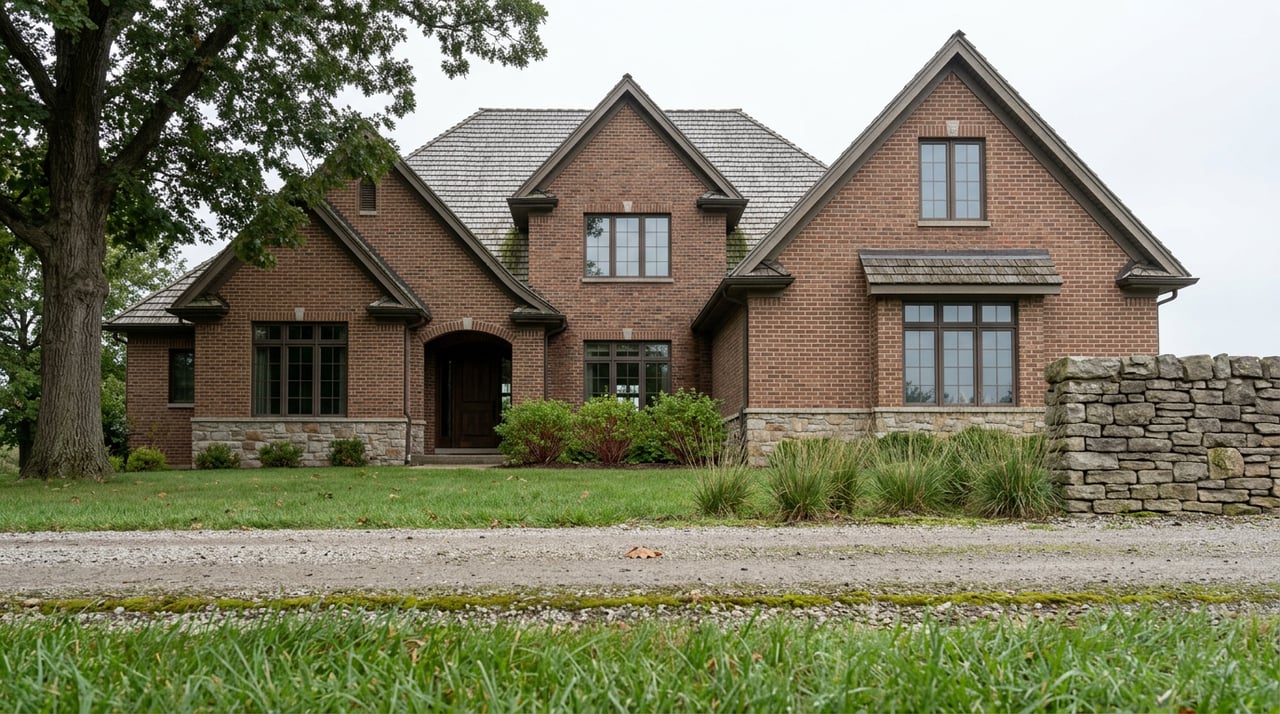
Picture a buyer under contract on a place outside Howell, four acres, a pole barn, the kind of property that draws people out of subdivisions and into Livingston County in the first place. Somewhere in the back of their mind is an assumption borrowed from how home inspections usually work: a licensed professional shows up, checks the box, the county signs off, everyone moves forward. For the furnace, the roof, the electrical panel, that assumption mostly holds. For the septic system, it doesn't.
Livingston County's Environmental Health Division permits septic systems, inspects them during installation, and investigates complaints when one fails. What it does not do is show up for a real estate closing. The division states plainly on its own site that it does not offer inspection services to homeowners or real estate agents. That line appears on the county's septic page, its wells page, and its permits page, not as a footnote but as the operating policy. If you are buying or selling a home with a septic system in the Howell area, the government agency that regulates that system will not be the one who tells you whether it's working.
What the County Actually Does, and Where It Stops
It helps to separate two very different moments in a septic system's life. The first is installation. When a system goes in, a Livingston County sanitarian inspects the excavation before it's backfilled, checks that the tank and drain field meet the Livingston County Sanitary Code, and signs off before the local building department will issue a certificate of occupancy. That part of the process is thorough and it's the county's job.
The second moment is transfer, the point when a house changes hands years or decades later. This is where the county steps back. There's no Livingston County sanitarian scheduled to visit before your closing date, no point-of-sale checklist the seller has to clear with the health department, no government inspector standing between an old system and a new owner. The system that was inspected once, at installation, may not have been looked at by anyone official since.
Some Michigan counties handle this differently. A handful of health departments in the state run formal time-of-transfer programs, sending their own staff to evaluate a septic system before a sale can close. Livingston isn't one of the counties that has built that kind of program, at least not one visible anywhere on the county's own site. Whatever due diligence happens here happens because a buyer, a seller, or a lender decides to make it happen, not because a local ordinance requires it.
Who Actually Shows Up
Since the county won't inspect a system for a real estate transaction, that work falls to private, licensed septic professionals. In and around Howell, that list includes Huff Septic, which built its Howell service around real estate transactions specifically and works to keep inspections from delaying a closing. Enviro-Assist, which serves Howell, Brighton, and the surrounding area, offers the same kind of pre-sale evaluation. D&J Septic covers Livingston County alongside Oakland, Washtenaw, and Wayne, and lists time-of-sale inspections among its regular services.
A real evaluation from any of these companies goes well beyond a glance at the yard. A thorough inspector will:
- Locate and pump the tank, then check for cracks, corroded walls, or a failing baffle
- Examine the distribution box or distribution pipes for cracks or tilting that would send effluent unevenly into the drain field
- Assess the drain field itself, often the part of the system most likely to reveal a real problem
- Confirm the system's setback distances from the well, property lines, and any waterway
- Compare what they find against current code, which may be stricter than what was in place when the system was originally installed
None of that is optional detail. It's the difference between a report that says "the tank is empty" and one that tells a buyer whether the system will still be doing its job in five years.
The Lender Backstop
Even without a county mandate, most Howell-area septic transactions get inspected anyway, because the lender asks for it. FHA and VA loans typically require proof that a septic system is functioning properly before the loan can close, and conventional lenders often ask for something similar depending on their own underwriting rules. In practice, this means financing does a lot of the work that a formal ordinance would otherwise do. A seller who assumes no inspection is coming because the county doesn't require one may be surprised when the buyer's loan officer asks for exactly that.
What Buyers Often Assume vs. What Actually Happens
| What buyers often assume | What actually happens in Livingston County |
|---|---|
| A county sanitarian will inspect the system before closing | The county explicitly does not perform this inspection for real estate transactions |
| The system was checked recently because it's on the property record | The last official check may date back to original installation, possibly decades ago |
| Setback compliance means contamination risk is a non-issue | Sandy soils common in the county can still carry risk even at the minimum setback |
| An older rural home has a septic tank | Homes built before 1965 may still have a cesspool, a different and less protective system |
Livingston's Soil Adds Its Own Wrinkle
Michigan's Part 127 rules set a minimum horizontal distance of 50 feet between a well and any septic tank, distribution box, drain field, or cesspool. That's a statewide floor, and it's meant to keep effluent from reaching the water a household drinks. What the rule doesn't account for is that soil does most of the actual filtering work between those two points, and not all soil filters equally well.
Livingston County's glacial drift soils tend to be sandy, which means water and whatever it's carrying move through them faster than they would through clay. A system sitting at exactly 50 feet in fast-draining sand isn't offering the same margin of safety as one sitting at 50 feet in a slower, denser soil. For a buyer evaluating a hobby-farm property or a lakefront lot in the Howell area, that's a detail worth asking an inspector about directly, not something to assume away because the number on paper meets code.
Older Homes, Older Systems
Howell's housing stock includes plenty of homes built well before modern septic codes existed. Properties from before 1965 may still be running a cesspool, a pit that takes in untreated sewage directly, or a seepage pit that receives effluent after minimal treatment. Neither offers the protection a modern septic tank and drain field provide, and neither shows up as a red flag just from looking at the yard. A private inspector who's done this kind of work in Livingston County will know to ask about the age of the system before assuming it's a standard setup.
What This Means If You're Buying or Selling in Howell
For sellers, this is a case where doing more than required tends to pay off. Michigan's Seller Disclosure Act already requires disclosing known problems with a septic system, and a seller who orders a private inspection before listing walks into that disclosure with facts instead of guesses. It also means any issue gets found on the seller's timeline, not during a five-day contingency window with a closing date already on the calendar.
For buyers, the plan is straightforward: don't assume a system is fine because nobody official has flagged it. Order the inspection, ask specifically about setback distances given the sandy soil common in this county, and ask the age of the home, since anything built before 1965 deserves a direct question about what kind of system is actually in the ground. Expect a full evaluation with tank pumping to run somewhere in the range of a few hundred dollars, a small cost next to the five-figure repair a failed drain field can turn into.
This is exactly the kind of thing that construction background is useful for. Knowing what a setback distance actually protects against, or what questions to ask an inspector about an older system, is the difference between a report you read and a report you understand.
FAQ
Does every home in the Howell area have a septic system? No, but private well and septic systems are common outside city sewer and water lines, which describes a lot of the exurban and rural properties around Howell.
Who pays for the septic inspection, the buyer or the seller? There's no county rule dictating this in Livingston County, so it's negotiated between the parties. Sellers who inspect proactively before listing sometimes cover that cost themselves to strengthen their position going into a sale.
How long is a septic inspection good for? There's no county-issued certificate with a fixed expiration in Livingston County, since the county doesn't administer this kind of evaluation. A private inspection reflects the system's condition at the time it's done, which is one more reason to schedule it close to the actual closing date rather than months in advance.
What happens if the inspection finds a problem? It doesn't automatically end the deal. Buyers and sellers typically negotiate from there, whether that means a price adjustment, a repair before closing, or an escrow arrangement to fund the fix afterward.
If you're weighing a purchase or a listing in Howell and want to talk through what a septic or well system on a specific property actually means for your plans, that's exactly the kind of conversation Benjamin DeRosa Realty Team is built for. Schedule Your Free Home Consultation and bring the questions. We'll help you get real answers before you're locked into a closing date.


