Thinking about buying land in Howell and building from the ground up? It is an exciting idea, but the biggest surprises usually show up before construction starts. If you understand zoning, utilities, permits, and site conditions early, you can avoid costly delays and buy with more confidence. Let’s dive in.
Start With Jurisdiction
One of the most important things to know about land in Howell is that buildability depends on where the property is located, not just the mailing address. Livingston County’s zoning page makes clear that the City of Howell and the surrounding townships each have their own zoning ordinances and review processes.
That matters because a parcel in the City of Howell may follow a different path than a parcel in Howell Township or another nearby township. The county also notes that it does not handle building or trade permits for the City of Howell or Green Oak Township, which is an easy detail to miss when you are comparing vacant land listings.
In the City of Howell, the zoning administrator must review plans before a building permit can be issued. Under the City of Howell code, no building permit may be issued unless a certificate of zoning compliance has been granted, and that review is tied to a site plan.
Check Zoning Before Designing
It is tempting to start with house plans, a detached garage idea, or even a barndominium concept. In Howell, that can be backward. Zoning should come first, because it tells you what type of home or accessory structure may be allowed on the parcel and what standards apply.
In Howell Township, the zoning ordinance for the AR Agricultural-Residential district is especially relevant for rural land buyers. According to the township zoning ordinance, this district allows general agriculture, agricultural buildings, and a conventional single-family dwelling on parcels as small as 1 acre, with a minimum frontage requirement of 150 feet and required setbacks shown in the ordinance.
That can make certain rural-home or hobby-farm plans more realistic. Still, it does not mean every parcel will work for every idea. Structure type, parcel dimensions, setbacks, and how the land is classified all need to line up before you move too far into planning.
Understand Howell Township’s Rural Character
If you are looking at acreage outside the city, Howell Township has a distinctly rural pattern. The Howell Township master plan describes the township as largely agricultural and rural, and notes that a large share of the township is zoned Agricultural Residential.
That rural character appeals to buyers who want more space, outbuildings, or a small-scale agricultural setup. It also means you should expect more due diligence around utility service, septic feasibility, driveway access, and site layout than you might see on a finished subdivision lot.
Know What Permits You May Need
Building on land usually involves more than one permit. In Howell Township, community services information says land use permits are required for structures such as fences, pools, buildings, additions, alterations, and demolition. Land divisions are also reviewed through the township’s Land Division Review Board.
The township ordinance further states that zoning permits are required for construction, enlargement, alteration, or moving of dwellings and other structures. Depending on the project, site-plan review may also involve fire, water, sewer, building, planning, and engineering review.
For city parcels, zoning compliance comes before the building permit stage. For township parcels, the zoning administrator similarly reviews zoning permits and site plans. In practical terms, if you plan to build a house with a large shop, detached garage, barn-style structure, or other accessory building, it is smart to confirm how each structure will be classified before design work begins.
Verify Water and Sewer Options
Utilities can make or break a land purchase. Around Howell, some areas have municipal water and sewer, while others rely on private well and septic systems.
According to the MHOG customer utility information, municipal water customers are located in Marion, Howell, Oceola, and Genoa townships, while sanitary sewer service is available in Genoa and Oceola townships. Howell Township also states that its municipal water customers are served through MHOG and its municipal sewer customers through the township wastewater treatment plant.
This is one reason two parcels that look similar online can have very different real-world costs. A lot with available utility connections may have a different budget and timeline than one that needs a private well, septic approval, and additional site work.
Plan for Septic and Well Approval
If municipal sewer is not available, Livingston County Environmental Health requires a soil evaluation before a septic permit can be issued. The county’s soil evaluation page says the soil evaluation must be approved before septic construction begins.
For new construction, the application must include a permanent street address, a certified survey and legal description, and an accurate plot plan. The county also notes that a survey is required before applying for well and sewage permits in certain cases, including some properties under 10 acres or where test holes are near a property line.
The county’s residential well and septic guidance adds that permits are issued for private wells and septic systems, sites are evaluated, work is inspected, and permits are valid for one year. That same guide says new wells must be tested at minimum for bacteria, arsenic, and nitrates.
Confirm Driveway Access Early
Access is another approval stream that buyers often underestimate. The Livingston County Road Commission permit office says a permit is required any time work is done within the road right-of-way, including new home access.
Its current permit office page lists a residential driveway approach application fee of $75. If the property fronts a state trunkline highway, MDOT requires a driveway permit in addition to the local building permit. That makes driveway approval something to confirm before closing, not after.
Budget for Drainage and Site Prep
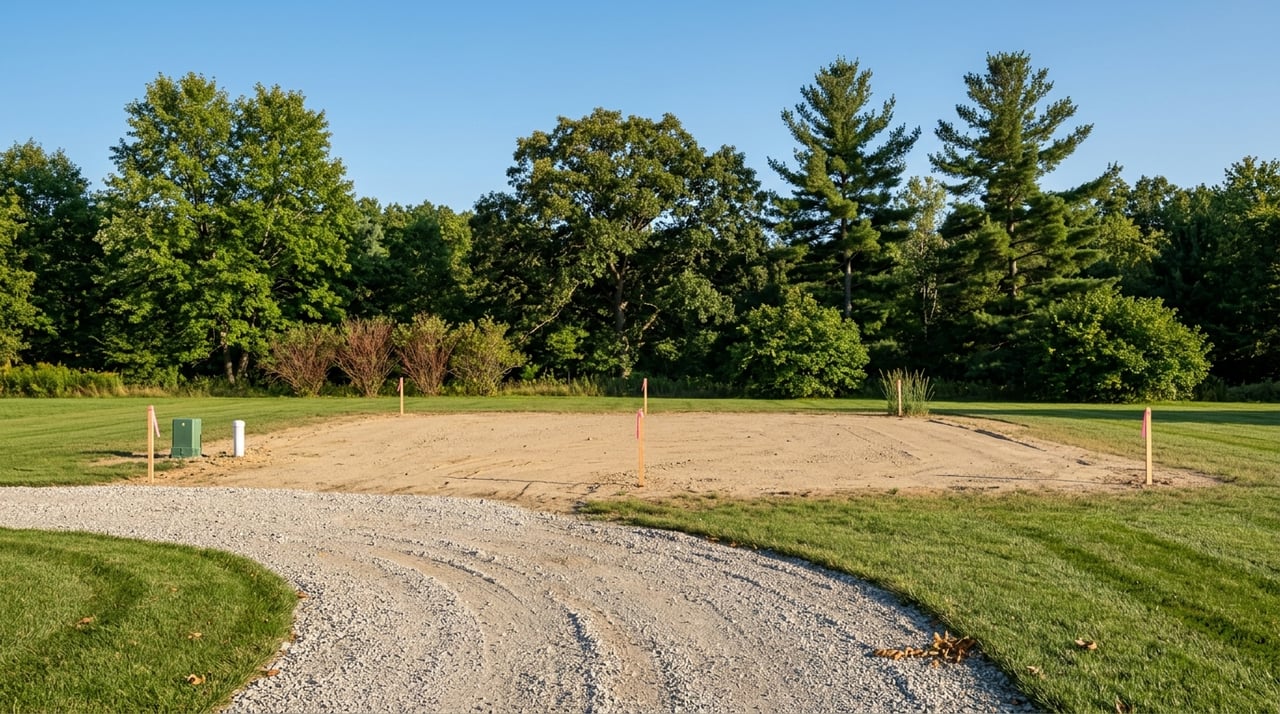
Raw land costs more than the purchase price. Site prep, drainage work, and erosion control can all affect your final budget.
The Livingston County Drain Commissioner says all residential plans must be reviewed for soil erosion and sediment controls before permit issuance. County materials also state that a 36-inch silt fence is required on all construction sites unless the inspector waives it or approves an alternative.
For larger projects, state rules may also apply. The county notes that projects with 1 acre or more of earth disturbance need coverage from the local soil erosion permitting entity. Even if the lot looks simple, grading and drainage can change both cost and design decisions.
Watch for Wetlands and Floodplain Issues
If land is near wetlands or surface water, you may need an extra layer of review. The Michigan Department of Environment, Great Lakes, and Energy says that activities in wetlands generally require a permit, and local review, where applicable, does not replace state approval.
Floodplain rules also matter. EGLE’s guidance says new construction in the 100-year floodplain must have the lowest floor at least one foot above the flood elevation. If you are considering a rural parcel with water features, low areas, or visible wet ground, this should be part of your early feasibility check.
Understand the Permit Sequence
A good build starts with the right order of operations. Livingston County’s residential building permit guide outlines a practical sequence for county-served parcels: obtain a driveway permit, obtain land use approval from the township or city, obtain an address, and then complete the building permit application with the required plans and documents.
That same county guide says building permits are typically issued within 10 or fewer business days after a complete submittal. Septic or well permits are usually reviewed within 3 to 5 business days, and the GIS office says addresses are usually issued within 4 to 5 days.
The key phrase is complete submittal. Missing approvals, missing surveys, or unanswered zoning questions can slow everything down.
Expect Some Upfront Costs
Before you ever pour a foundation, there are real due diligence costs to plan for. Livingston County’s fee schedule lists some helpful examples: a new residential building permit at $150, a pole barn permit at $75, a storage building permit at $75, and a GIS address fee at $20.
The environmental health fees in the same county resources include a single-family soil evaluation at $390, a new-construction single-family septic permit at $520, and a new residential water supply permit at $390. Add in the Road Commission’s $75 residential driveway approach application fee, and you can see why land due diligence deserves its own budget line.
What Smart Buyers Confirm Before Closing
In Howell, listing language does not establish that a parcel is ready to build. The county’s broader building department guidance supports the bigger takeaway: buildability is established by due diligence.
Before you close on land, it is wise to confirm:
- Which jurisdiction governs the parcel
- The zoning district and whether your intended use fits
- Minimum lot size, frontage, and setback requirements
- Whether municipal water or sewer is available
- Whether septic and well approvals are likely if utilities are not available
- Whether a survey is already available or will be needed
- Whether driveway access can be approved
- Whether wetlands, floodplain limits, or drainage issues may affect the build
- What permits, fees, and timelines apply to your project
If you get those answers first, you can shop for land with a much clearer picture of the real cost, timeline, and feasibility.
If you are weighing acreage, a custom home lot, or a small rural parcel in Howell, having a real estate advisor who understands both land and construction can save you time and headaches. Benjamin Derosa brings practical, builder-informed guidance to help you evaluate land opportunities with more confidence.
FAQs
What should you check before building on land in Howell?
- You should confirm jurisdiction, zoning, utility access, survey status, driveway approval, soil conditions, and any wetland or floodplain issues before closing.
Does Howell Township allow a home on agricultural-residential land?
- According to the Howell Township zoning ordinance, the AR Agricultural-Residential district allows a conventional single-family dwelling on parcels as small as 1 acre, subject to frontage, setback, and other ordinance standards.
Do you need a septic test before building on land in Livingston County?
- Yes. If municipal sewer is not available, Livingston County Environmental Health requires a soil evaluation before a septic permit can be issued.
Do you need a driveway permit for a new home site in Howell?
- Yes. The Livingston County Road Commission says a permit is required for new home access within the road right-of-way, and parcels on state trunkline highways may require an additional MDOT driveway permit.
Can wetlands or floodplain rules affect land in Howell?
- Yes. EGLE says activities in wetlands generally require a permit, and new construction in the 100-year floodplain must meet elevation requirements.
How long do building permits take in Livingston County?
- Livingston County says building permits are typically issued within 10 or fewer business days after a complete submittal, while septic and well permits are usually reviewed within 3 to 5 business days.