Thinking about buying your first rental in Lansing? It can be an appealing market for small investors, but the numbers only work when you look beyond the purchase price and monthly rent. If you want a practical starting point, this guide will show you how to evaluate small rental opportunities in Lansing, what local costs matter most, and where first-time investors often get tripped up. Let’s dive in.
Why Lansing Gets Attention
Lansing stands out because it has a substantial renter base and relatively modest housing costs. According to Census Reporter’s Lansing profile, the city has 54,614 housing units and 50,209 households, while Census QuickFacts reports a median gross rent of $976 and a median owner-occupied home value of $119,400.
For you as a small investor, that combination can create an accessible entry point compared with higher-cost markets. It also means affordability matters, so a rental that is clean, well-maintained, and priced realistically may appeal to a wide pool of renters.
Start With the Right Property Type
Not every rental format works the same way, especially when you are just getting started. In the Lansing-East Lansing housing market area, HUD reports that occupied rental units are spread across several property types: 33% single-family attached or detached homes, 11% in 2-to-4-unit buildings, and 52% in properties with 5 or more units, with the remainder in other housing types.
That matters because the most common small-investor entry points in this area are still single-family homes and small multifamily properties like duplexes, triplexes, and fourplexes. These property types are familiar, easier to understand operationally, and often fit the goals of investors who want manageable scale.
Single-Family Homes
A single-family rental can be a simpler first step if you want one tenant, one lease, and a more straightforward maintenance setup. It may also be easier to finance and easier to resell later if your plans change.
The tradeoff is concentration risk. If the home is vacant, your rental income drops to zero until you place a new tenant.
Duplexes to Fourplexes
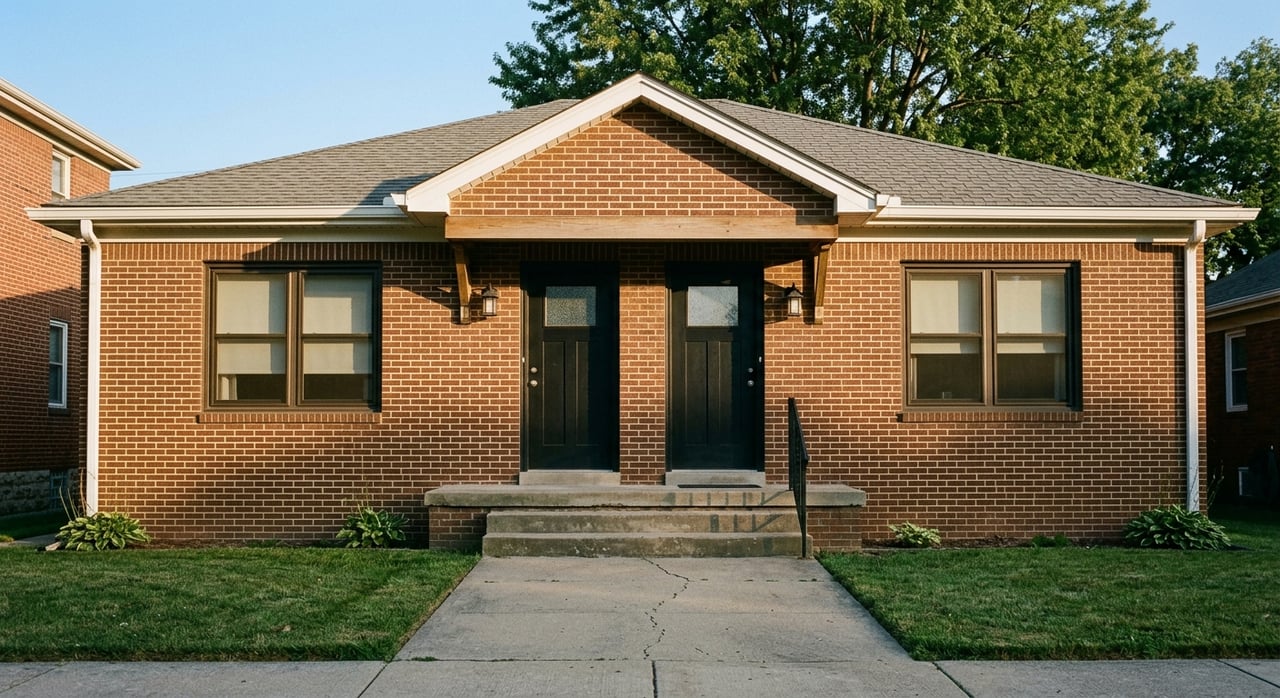
Small multifamily properties can spread vacancy risk across more than one unit. If one unit turns over, the others may still produce income while you handle repairs and re-leasing.
That said, these properties can come with more moving parts. More units often mean more maintenance coordination, more tenant communication, and more compliance details to manage well.
Understand Local Rental Demand
A good Lansing investment is not just about the building. It is also about matching the property to the kind of rental demand that already exists in the area.
HUD’s Lansing-East Lansing Comprehensive Housing Market Analysis describes the overall rental market as balanced, with an estimated 6.5% rental vacancy rate, while the Lansing apartment submarket was tighter at 2.7% at the time of the report. That tells you there is rental demand here, but it does not mean vacancy can be ignored.
Campus Influence Matters
HUD also estimates that students occupy about 15% of rental units in the housing market area, especially near Michigan State University and on the east side of Lansing. If you are considering a property in a campus-adjacent area, lease timing and turnover may look different from a more conventional neighborhood rental.
That does not mean every east-side or nearby property should be treated as a student rental. It simply means some locations may experience more seasonal turnover and more lease activity tied to the academic calendar.
Use Rent Benchmarks Carefully
One of the biggest mistakes new investors make is assuming market rent without checking a reliable benchmark. A useful starting point is the FY 2025 HUD Fair Market Rent schedule for Ingham County, which lists:
- 1-bedroom: $1,012
- 2-bedroom: $1,268
- 3-bedroom: $1,627
- 4-bedroom: $1,679
These figures are best treated as reference points, not guarantees. They can help you build a conservative estimate for underwriting, especially if you are comparing several properties and need a consistent baseline.
Underwrite for More Than Rent
A small rental can look profitable on paper if you only compare mortgage payment to monthly rent. In Lansing, that shortcut can create trouble fast.
A stronger underwriting model includes several recurring and irregular costs that affect real cash flow.
Budget for Vacancy
Even in a market with healthy rental demand, you should assume some vacancy. HUD’s market analysis and broader vacancy data both support the idea that Lansing is not a place where you can safely assume every unit will stay occupied without interruption.
At a minimum, your numbers should include:
- A vacancy reserve
- Make-ready costs between tenants
- Repair and compliance reserves
- A tax escrow buffer
These are not fancy extras. They are part of a realistic plan.
Watch Property Taxes Closely
Property taxes can change your returns more than many first-time investors expect. Ingham County’s millage information explains that one mill equals $1 for every $1,000 of taxable value, and the county’s 2025 apportionment materials show that one Lansing tax-rate sheet lists a total homestead millage rate of 62.6447 mills and a total non-homestead millage rate of 80.0925 mills.
For an investment property, using a rough citywide estimate is risky. The actual tax bill depends on the parcel location and school district, so you should always use an address-specific estimate before you decide a property works.
Plan for Repairs Early
Deferred maintenance is not just a quality issue. It can become a direct financial problem.
The Michigan Judicial Institute landlord-tenant benchbook notes that if a landlord fails to make repairs after reasonable notice, a tenant may have a repair-and-deduct remedy in some situations. For you, that means repair reserves are not optional if you want to protect both your property and your cash flow.
Know Lansing’s Rental Registration Rules
Lansing has a rental registration and compliance system that small investors need to understand before closing. Under City of Lansing Ordinance #1338, all rental properties in the city, except owner-occupied single-family dwellings, are subject to rental registration and compliance provisions.
Owners and agents must register contact information. If you live more than 40 miles from Lansing city limits, you must also have a registered local agent in Lansing.
The ordinance also allows a Certificate of Compliance to be revoked if a reinspection finds the property unsafe or out of code. In practical terms, that means compliance is part of operating the property, not just something to handle once and forget.
Follow Michigan Deposit Rules Carefully
Security deposits are another area where first-time landlords can make expensive mistakes. According to the Michigan Attorney General’s renter rights guidance, a residential security deposit cannot exceed 1.5 months’ rent and must be kept in a regulated financial institution unless the landlord posts a bond.
The Michigan Judicial Institute adds several timelines and process requirements that matter:
- Written deposit information within 14 days of possession
- Move-in and move-out inventory checklists
- Itemized damage notice within 30 days after lease termination
- Return of balance or start of a claim within 45 days after move-out
If you are buying a small rental for passive income, this is your reminder that landlording is still an active business. Good systems matter.
Treat Fair Housing as Core Operations
Fair housing compliance should be built into how you screen, market, and manage a rental from day one. The Michigan State Housing Development Authority fair housing resources explain that housing discrimination protections apply when renting, buying, financing, or insuring a home, and the state also announced source-of-income protections in late 2024.
For you, the practical takeaway is simple: use consistent processes, neutral criteria, and accurate documentation. That approach helps protect applicants, supports compliance, and reduces your risk as an owner.
A Practical Lansing Starter Strategy
If you are just getting started with small rental investments in Lansing, a smart first move is to keep your buy box simple. Look for property types you can understand, estimate expenses conservatively, and avoid stretching your numbers to make a deal look better than it is.
A solid starting checklist may include:
- A single-family home, duplex, triplex, or fourplex
- Address-specific tax estimates
- Conservative rent assumptions using local benchmarks
- A clear repair budget before closing
- A plan for vacancy and tenant turnover
- A process for Lansing registration and compliance
- A system for Michigan deposit rules and documentation
That kind of approach is not flashy, but it is durable. In a market like Lansing, durable usually beats aggressive.
Where Local Guidance Helps
The right rental property is not only about cap rate or monthly cash flow. It is also about condition, layout, repair exposure, neighborhood fit for your strategy, and how realistic your budget is once taxes, compliance, and maintenance are included.
That is where hands-on property knowledge can make a difference. If you want help evaluating a Lansing rental through both an investment lens and a builder-minded condition lens, connect with Benjamin Derosa for practical guidance on buying in Greater Lansing.
FAQs
What property types are common for small rental investments in Lansing?
- In Lansing, common small-investor entry points include single-family homes and 2-to-4-unit properties such as duplexes, triplexes, and fourplexes, based on HUD housing market data.
What rent benchmarks can you use for Lansing rental underwriting?
- A useful conservative reference is the FY 2025 Ingham County HUD Fair Market Rent schedule, which lists $1,012 for a 1-bedroom, $1,268 for a 2-bedroom, $1,627 for a 3-bedroom, and $1,679 for a 4-bedroom unit.
What Lansing rental compliance rules should new landlords know?
- In Lansing, most rental properties must follow the city’s rental registration and compliance rules, including owner or agent registration and ongoing code compliance requirements.
How do property taxes affect Lansing rental investments?
- Property taxes can significantly change your returns, and because rates vary by parcel location and tax setup, you should use an address-specific estimate instead of a broad city average.
What Michigan security deposit rules apply to Lansing rentals?
- Michigan limits residential security deposits to 1.5 months’ rent and requires specific handling, notice, checklist, and return timelines that landlords need to follow carefully.
Is Lansing a market where you can ignore vacancy risk?
- No. Lansing has meaningful rental demand, but vacancy planning still belongs in your underwriting, along with make-ready costs, repair reserves, and tax buffers.